Posted: 2026-03-30
🔗 Amphetamines And You
The official story is that prescribed amphetamines have a similar risk profile to other psychiatric medications. As soon as you start digging, this story rapidly becomes extremely problematic.
This is not a population-level conclusion; most people who take these drugs are completely fine and often calm down. But when these drugs fail, they tend to fail in incredibly problematic ways. A full analysis of the risks and benefits is outside of scope, but it might be helpful to carefully examine a catastrophic failure mode that pops up alarmingly regularly.
Amphetamine is the same molecule whether it's legal or not.
I used to do a lot more advocacy than I do now. The number of people I helped get diagnosed with ADHD was in the double digits. I basically stopped doing it because how many fucking ruined lives are you willing to be responsible for? One should have been plenty.
Stimulants (especially amphetamines) occasionally have a distinctive failure mode in which the drug destroys the reliability of the person reporting on its effects.
If someone's antidepressants are not good for them, and you say so, the reply will look like "yeah, I guess I've been in a bad mood a lot lately. You might be onto something. I'm going to talk to my doctor."
If someone's amphetamines are not good for them, and you say so, the reply will often be more like "FUCK YOU. HOW DARE YOU? WHAT THE FUCK DO YOU KNOW? YOU'RE NOT QUALIFIED, YOU KNOW NOTHING ABOUT THIS OR MY MEDICAL HISTORY. WHO THE FUCK ARE YOU TO GIVE ME MEDICAL ADVICE?" In these cases, the person becomes incredibly forceful, certain, and morally outraged; completely unreachable while utterly convinced of their own clarity.
Everything is louder and brighter. Everything makes more sense. Every conflict has an obvious villain. The drug itself becomes untouchable and unspeakable. The person's anger is focused, incandescent and driven. There is a very shouty, very defensive, very aggressive subset of the amphetamine-using population, and every encounter I've had with them felt very similar. They are incredibly verbose, and will completely dominate any interaction.
There are many drugs which the public has misconceptions about. Very few generate this kind of defensive fury and insistence that scrutinising their safety is somehow immoral.
In Victoria, a common arrangement is that a psychiatrist diagnoses ADHD, then delegates prescribing rights to a GP the patient sees monthly (aside from maybe a yearly check-in with the psychiatrist). These appointments are, in reality, mostly self report:
"How's your mood?" "Good."
"How's your focus?" "Excellent."
"Sleeping okay?" "Yeah."
"Not feeling irritable?" "No."
"Here's your script."
The people around them get reclassified: partner becomes abuser, parents become toxic, friends become enemies — designations which might be earned, but all too often are adopted ahead of the evidence. But the meds are going great. Monitoring is supposed to include relationships and employment, but clinicians who realise they're doing damage can end up in an awkward position with no safe choices.
Studies on the drugs look very similar: lots of self-report and reduced attention towards the carnage in the person's broader life. Patients will accidentally "conspire" to make the drug look safe, because they'll say whatever they need to so they can keep receiving it.
An FDA review of another stimulant program spells the logic out even more bluntly: in the "traditional design" with open-label titration and randomisation of only patients who tolerated the drug, events causing discontinuation before randomization would not be counted. [1] In other words, be aware that the study pre-filters in the people who want to stay on the drug, making it look safer and more effective than it really is.
Self-assessment doesn't only fail at detecting escalating aggression: it can also fail to detect the drugs actively worsening the person's functioning.
Having ADHD does not immunise someone against responding badly to amphetamines. A person can genuinely have ADHD and still get addiction, aggression, or paradoxically worse functioning from the drug. It might even make your focus worse.
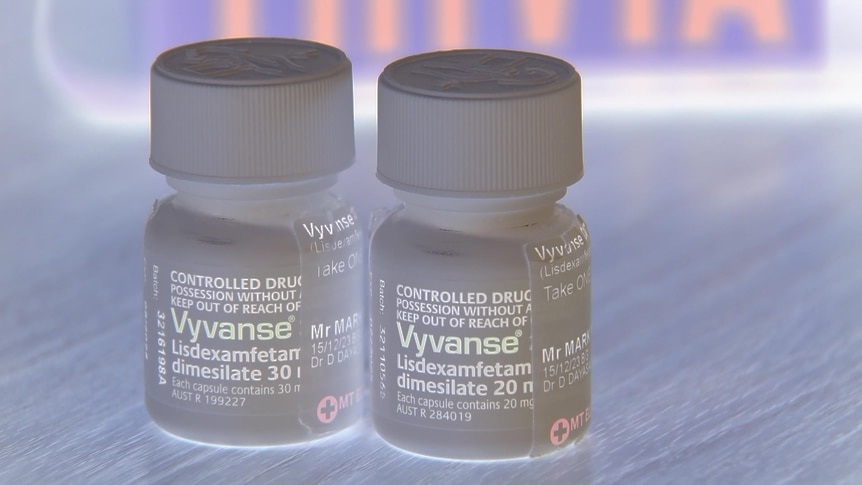
People do not suddenly turn into abusers the moment their partner fills a Vyvanse script. The human cost of this problem is very real.
🔗 Other Lived Experience
From support workers who have seen this repeatedly:
"Amphetamines make you into the worst version of yourself. People become super defensive about the drugs."
~ Anonymous
"I'd concur with the other quote. It made them literally the opposite of what their genuine personality is. Top, solid, good person, but when they were on it, it just wiped that out, and it was like they were a blob of dark, heavy, angry energy. You could just be near them and that was the aura you'd feel."
~ Anonymous
"It was a bit scary. I needed to get away from them."
~ Anonymous
"I could see it as soon as I walked in the room. They had the bearing of a dog that wanted to bite."
~ Anonymous
"They brought out their darkest, darkest personality, from a very sweet sober individual. Sometimes I had to remove myself from the situation.
~ Anonymous
🔗 Checkin
Written on: 7.5mg olanzapine since 2025-11-11; taken continuously since 2006
Cognitive capacity: improving! - estimate 15% of brain and climbing
I absolutely think that objective longitudinal metrics should be a critical part of ADHD treatment, but that's a story for another time. Amphetamine-induced mania is an entirely new level of fucked up, and you should be aware of it.